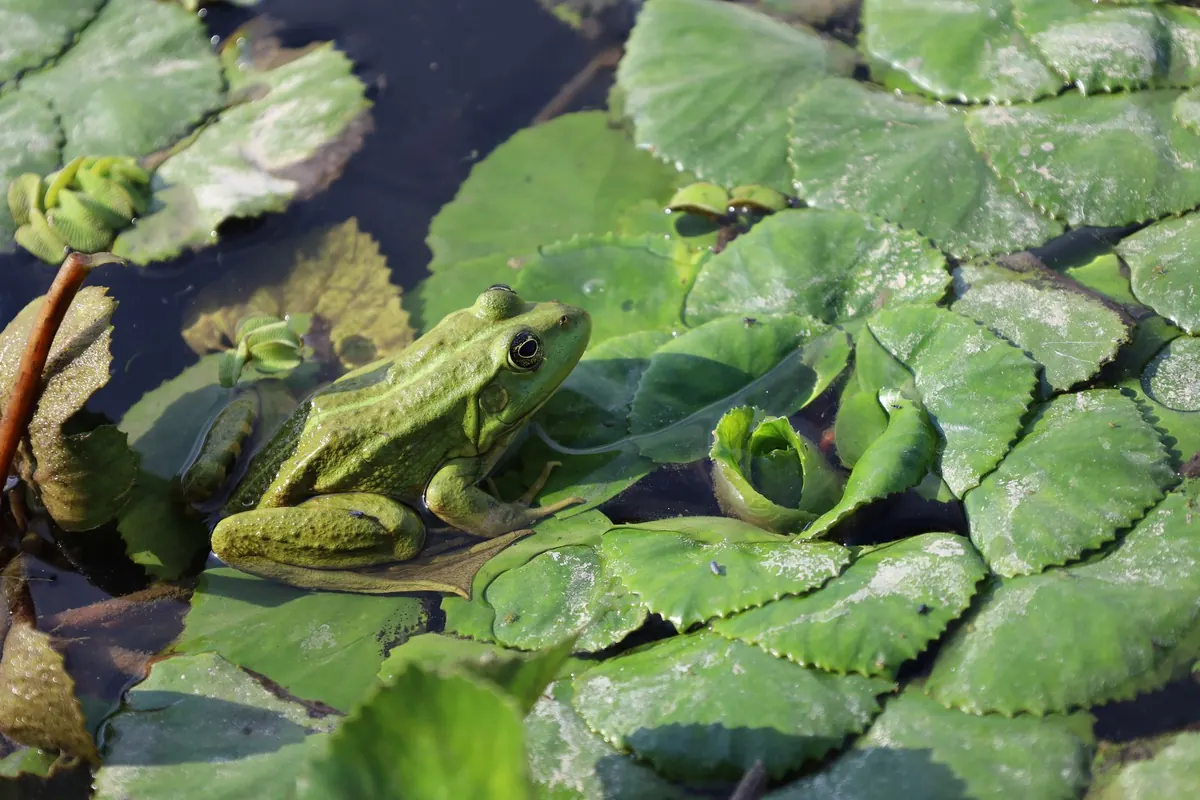
A pond the size of a dining table will pull in more wildlife than a row of feeders. Frogs find new water surprisingly quickly, even in a town, and dragonflies will patrol anything that holds water long enough for their larvae to grow. Here is the practical version: where to put it, how deep to dig, what to plant, and how to avoid the mistakes that leave you with a green puddle nothing uses.
Pick the right spot first
Aim for at least half a day of sun. Dragonflies need warmth to hunt, and most pond plants flower properly only in decent light. A little afternoon shade is fine; some shade beats none in a small garden that bakes in summer.
Two things to avoid: large trees, because roots puncture liners and fallen leaves rot and pull oxygen from the water, and the lowest point of a sloping garden if it collects run-off from a drive or road. That just fills your pond with nutrients and pollutants.
Keep it visible from a window or path — you will notice problems sooner and enjoy it more. If there are toddlers about, plan for them: a wide shallow shelf, a rigid mesh cover, or a fence you can remove later.
Size, depth and shape
Around 1.5 metres by 1 metre is enough to work with, though bigger is easier to keep in balance. Include a deep section of roughly 60 centimetres in the middle, so the bottom stays unfrozen in most winters and frogs can sit out a cold spell in the mud.
Build in shelves too. A planting ledge 20 to 25 centimetres below the surface gives marginals somewhere to sit, and one gently sloping side gives hedgehogs, birds and amphibians a way in and out. Curved, irregular edges blend into planting far better than a rectangle.
Worth knowing: dragonfly larvae spend a year or more underwater before climbing out to emerge as adults, so a pond that dries every summer will never produce them. Choose a liner that holds water all year.
Digging and lining
- Mark the outline with rope or hosepipe and dig in layers: shelves first, then the deeper section.
- Keep the topsoil, turned upside down at the edges or saved for a bog garden.
- Remove sharp stones, glass and thick roots. Line the hole with sand, old carpet or geotextile underlay, then a soft fleece.
- Cut the liner generously — the longest measurement plus twice the depth plus 60 centimetres of overlap, and the same for the width. Butyl rubber lasts for decades.
- Lay it loosely, weight the edges with stones and fill slowly with rainwater from a water butt.
- Tuck the overlap down and hide the edge with turf, gravel or flat stones, leaving one shallow beach.
Rainwater is worth the effort. Tap water brings nutrients, and in some areas chloramine that does not simply evaporate, so expect a green flush if you use the hose. Let it settle for a fortnight before planting.
Planting for frogs and dragonflies
Restraint is the skill here. Two or three clumps of marginal plants, a couple of oxygenators, and open water you can still see. Native species are the better bet, because local insects have evolved alongside them.
- Early nectar and cover: marsh marigold, water mint, water forget-me-not.
- Vertical stems: yellow flag iris, soft rush and flowering rush give dragonfly larvae something to climb when they leave the water.
- Oxygenators: hornwort, water starwort and curled pondweed, kept in baskets so they do not take over.
- Floating cover: frogbit or a small water lily, which shades the water and hides tadpoles.
Check before you buy. Floating pennywort, water fern, parrot's feather and New Zealand pygmyweed are invasive and, in some cases, illegal to sell or release into the wild. Never tip pond plants into a stream, and never lift plants from the wild.
Add a bog garden alongside
The spoil has to go somewhere, and a bog garden is the best use for it. Dig a shallow depression beside the pond, line it with liner offcuts and punch a few holes just above the water level so it stays damp without flooding. Fill with the excavated soil mixed with compost and plant moisture lovers: purple loosestrife, meadowsweet, ragged robin, sneezewort.
It keeps the pond edge looking natural, and it is an insect magnet in its own right. On heavy clay you can sometimes skip the liner and simply dig a hollow that holds the winter water table.
The details that matter
No fish. Goldfish, and even small native fish, eat spawn, tadpoles and dragonfly larvae, and they cloud clear water. Leave out pumps and fountains as well; still water with plenty of plants is what insects want.
Give everything a way out. Stack a few stones or a piece of log at the sloping edge, and put a flat slab at the waterline — dragonflies bask on it and birds drink and bathe there.
Then leave the surroundings slightly wild. A log pile, long grass, leaf litter and a patch of nettles give frogs somewhere to hide between visits to the water. Skip slug pellets and weedkiller nearby; the whole point is the food chain running through the pond.
Looking after it
The first year will look wrong. Algae arrives before the plants get going, and green water is normal while everything settles. Resist the urge to empty it and start again.
After that the work is small. Lift out handfuls of duckweed and blanketweed by hand, net some fallen leaves in autumn, and leave the marginal stems standing until late winter, because insects overwinter inside them. Top up in dry spells with rainwater only, and never drain and scrub the pond.
Start small, then be patient
Build it once, properly, then wait. Frogs and newts often appear within weeks of the water clearing; dragonflies usually take a couple of seasons, and only if the pond holds water all year. Damselflies generally arrive first, resting on iris leaves in the sun.
Keep the margins a bit untidy. The mossy stones, the rotting log and the grass left long are where most of the life actually is.
Photo: Andreea Vieru / Pexels